A new short-term study abroad course is giving students the chance to bring their studies to life and directly engage with the sacred spaces they’re learning about in the classroom.
REL 360: Sacred Spaces of India is the Department of Religion’s first short-term study abroad course. It was offered for the first time in late Fall 2025 through early Winter 2026, with the help of Grace Schoedel’s gift to the department, which provides scholarships for travel and study related to interfaith study in memory of religion professor emeritus William R. Schoedel.
The course and trip were planned and taught by professors Adam Newman and Anna Tosato.
“I work on South Asian religions, specifically Hinduism in North India, so it was just a perfect fit for the work that I do,” said Newman. “[Tosato] does as well, but she focuses on sculpture, while I’m more texturally oriented. It’s a nice balance when we’re on the ground and we’re looking at a temple. She can talk about the architecture in a way that I can’t, and I can relate some of the stories that are found in the temple architecture itself.”
As part of the course, students got the chance to explore the holy sites of Hinduism, Jainism, Islam, and Buddhism, experiencing firsthand how the blend of geography, architecture, and art shapes the cultural belief systems of South Asia, both past and present.
“We wanted students to see how sacred architecture and religious spaces function in the contemporary world, not only as historical monuments, but as vibrant places used daily by pilgrims, devotees, and tourists alike,” said Tosato.
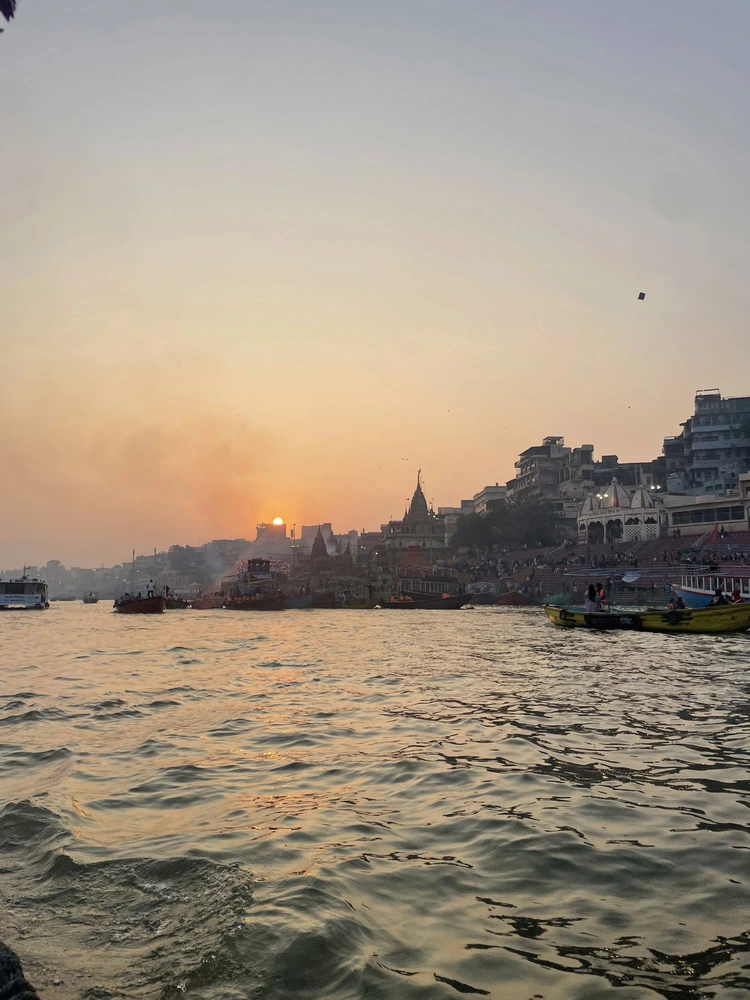
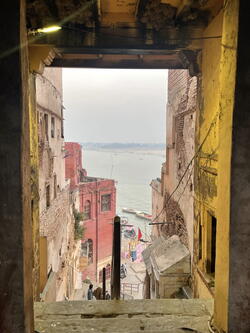
Students visited cultural heritage sites in and around two cities in India. They spent ten days in Mysore, a vibrant city in the southern state of Karnataka, and another ten days in Varanasi, one of the most important sacred cities in northern India. In and around Mysore, students visited sites including the Hoysala temples and the Jain pilgrimage center of Shravanabelagola. In and around Varanasi, the group spent time at the Alice Boner Institute, a cultural center dedicated to the Austrian sculptor and Indologist Alice Boner, and visited Sarnath, one of the most significant Buddhist pilgrimage sites in the world.
What these stops had in common: they weren’t static spaces but living history.
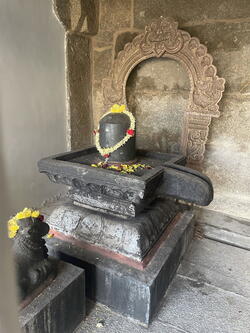
“You’re able to see time almost move in front of you,” said Newman. “History is literally alive. You’re walking into a temple that was built 1000 years ago, and it’s still active. You’re watching people use that space as devotees. These are lived spaces that are deeply real and meaningful in people’s lives.”
For Bella Boudreaux, a double major in stage management and religion, it was this focus on living, sacred spaces that drew her to both the course and the study of religion.
“It’s such a great way to understand the way that people think and move in the world,” said Boudreaux. “One of the best ways to learn about a religion you’re unfamiliar with is to go to their sacred spaces. Seeing the way people move through those spaces is key to understanding the religion itself and something that really stuck out to me.”
Lanea Rohan, who recently graduated with a Master of Computer Science, was looking for a class unrelated to her degree to take for fun. She had already done some coursework on Indian art, architecture, and temples, and decided to take a chance and see if she could join the group.
“Luckily, the professors said yes, and I was able to join the class,” said Rohan. “For me, the most impactful part of the trip was getting to listen to people who—as a traveler and a tourist—I would have very little access to. We were able to hear from incredible religious leaders and university professors.”
As for Newman and Tosato, they’re already looking ahead to the next session in Winter 2027-28. They’ll be holding informational sessions throughout the spring and fall semesters and letting students know that everyone is welcome, regardless of their major or specialization.
“Ultimately, this program is about much more than visiting important sites or learning about religious traditions,” said Tosato. “It is about developing curiosity, adaptability, empathy, and a broader understanding of the world.”