For many immigrants, attending their naturalization oath ceremony and marking the transition from permanent resident to naturalized citizen is the light at the end of a long tunnel.
It’s the culmination of an often complicated journey—and it’s alumna Jessica Nicholas’s favorite part of her job at The Immigration Project in Normal, Illinois.
“It’s really special when I get to go to an oath ceremony to support a client who’s really had to work hard for this,” said Nicholas. “It’s a huge honor to be able to be there with them, supporting them through the process and then also celebrating with them at the end.”
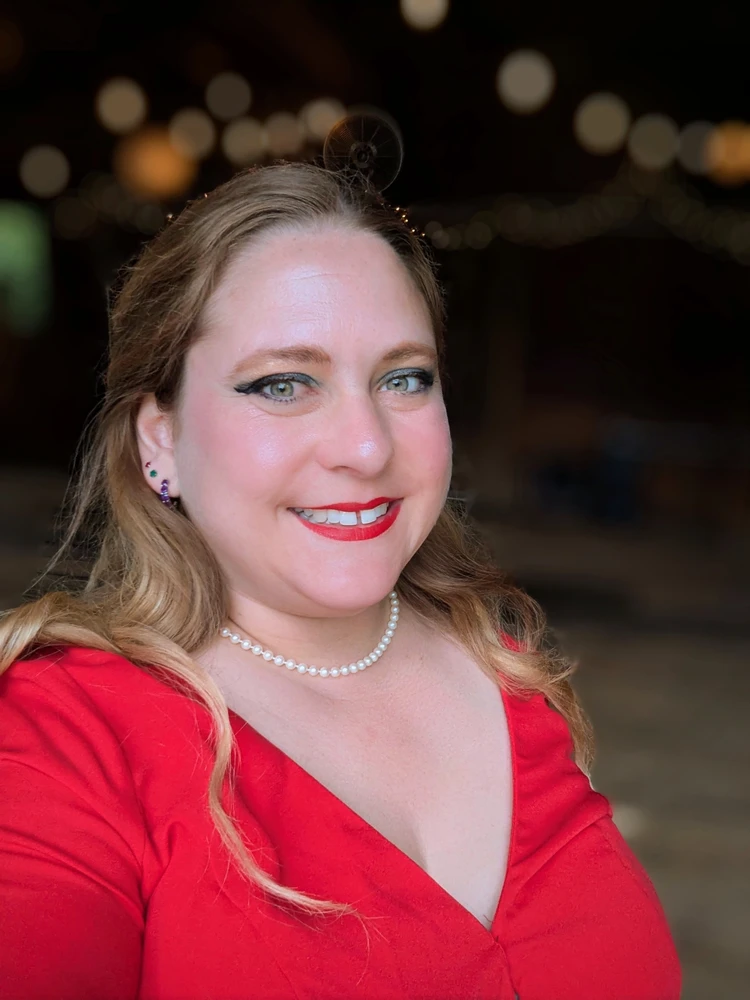
Nicholas (MA, '12; PhD, '18; French linguistics) is the managing advocate for the Community Legal Access Workshops Program—and a Department of Justice fully accredited immigrant representative—at The Immigration Project, where she helps low-income Illinois residents go through the U.S. naturalization process.
As part of her role, she organizes in-person and virtual workshops and seminars for applicants from 85+ counties throughout the state of Illinois, leads a team of outreach and legal staff, and trains and supervises high school, undergraduate, and legal interns.
“A lot of people can’t easily get to us, or they might not have easy access to the technology needed to meet with us virtually,” she said. “So we go and hold workshops in different parts of the state. A lot of rural places in Illinois don’t have immigration or legal services anywhere nearby, so there’s really a huge need, and we get to be part of that.”
Nicholas is also the founder of Translation Pour Vous [Translation for You] LLC, through which she provides low-cost translations of immigration and education related documents, hosts podcasts, interprets, and delivers presentations to community groups, school districts, and university audiences. That work dates back to her time as an undergraduate, when she translated a book as a senior project, and her time as a graduate student at Illinois, when she contributed her translation skills and became connected to the Francophone community in the Champaign-Urbana area.
“I wanted to use my language skills to help things be accessible to more people,” said Nicholas.
While the work she’s doing now is rewarding and impactful, it’s not what Nicholas had envisioned for herself when she was still a student at the U of I. Neither was her first stop after graduating.
“I knew from the beginning that there was a chance I wasn’t going to end up going into higher education, because you never know what the job market is going to be like or what might happen in your life,” she said.
She pivoted and worked as a language educator at the high school level, leading a world languages department through the COVID pandemic, always keeping flexibility and service in mind.
“I intentionally made sure that I was always doing something else, almost like I was living parallel lives,” said Nicholas. “I was always doing translation work, volunteering, and working with the local immigrant community. I still had a [Washington] teaching license and transferred it to Illinois, knowing that I liked teaching high school, and that even though that’s not necessarily what I thought I had been going to school for, it was something I could do.”
But it was her unconventional journey after receiving her PhD that led her here—not just to her work as an immigrant advocate, but also back to campus, where she walked across the stage once more, this time as SLCL’s Spring 2026 Convocation speaker.
“It was the honor of a lifetime,” she said. “I felt seen in a way that I don’t normally feel seen by higher education, especially after not getting the kinds of jobs they expect you to get after a PhD.”
She had a few key messages she wanted to share with students that day, the kind she would have liked to have heard when she was in their shoes, starting with: “You are bigger than your job.”
“The thing you do to pay the rent does not define who you are as a person, and it does not define your educational experiences and what you got out of them,” said Nicholas. “You can’t always see the future from where you’re standing when you’re crossing that stage at graduation. You can’t see what’s distantly on the horizon that might end up requiring the exact set of skills and knowledge that you’ve obtained with your degree. I wanted new graduates to hear that, and whether or not it sunk in right away, I hope it plants a seed.”
Another seed Nicholas hopes to have planted: that of paying it forward and doing your part as a citizen of the world—because the “real world” doesn’t start at graduation.
“You’ve been part of the ‘real world’ this whole time,” Nicholas told students during her speech, later adding, “You can make positive changes in the world by doing small things, especially if you do small things over and over. In fact, we all have the responsibility to do so.”