When you think of language learning, there are a few languages that likely come to mind first: Spanish, French, German, Italian. 91% of Americans who study languages in schools and universities choose one of those four languages, according to the National Council of Less Commonly Taught Languages (NCOLTL).
The Intensive Language Instruction Program (ILIP) is helping language learners expand their horizons with its offerings, which are a blend of familiar and unique.
“Less commonly taught languages open doors that the major world languages simply don’t,” said Tala Naumovska, a PhD candidate in the Department of Slavic Languages & Literatures and the instructor for Ukrainian through ILIP this summer. “They give students access to literatures, histories, and communities that are otherwise mediated through translation, or worse, through the lens of a more dominant neighboring culture.”
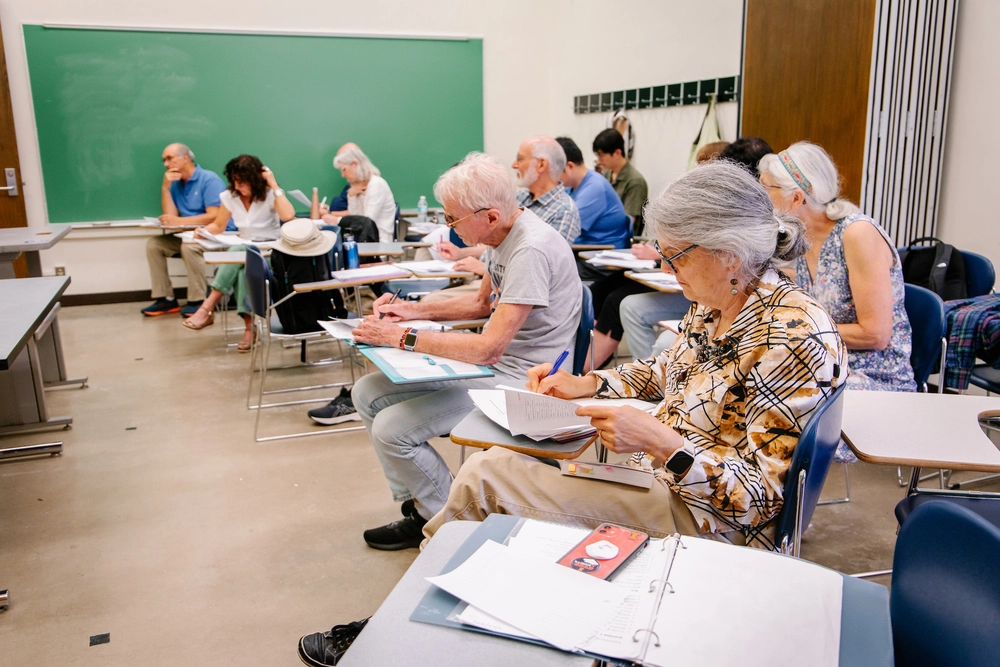
ILIP is an accelerated language learning program that provides an immersive classroom atmosphere, with both in-person and online options available. Classes are open to anyone on campus and the general public. They include the languages you might expect to see, such as Spanish and French, but also less commonly taught languages like Biblical Greek, Korean, and Ukrainian, which were all offered during the Summer 2026 session.
Joseph Baronovic, a PhD candidate in the Department of Classics and the instructor for Biblical Greek this year, said these languages are often more beginner-friendly than people think.
“Because it tells well-known narratives and generally has simpler prose than Classical Greek, Biblical Greek offers an entry point to students who are inexperienced with the language. We can read as we learn,” said Baronovic. “And learning these less-commonly taught languages gives us access to new cultures, or another side of a familiar culture.”
Virginia Dominguez, a professor of anthropology at Illinois, said it was that variety of offerings that first drew her to ILIP. She’s taken several courses over the years, including Arabic, Modern Greek, and now Ukrainian.
“I was born in Cuba, but I travel a lot and have lived in many cities in the U.S. and many countries on five continents,” said Dominguez. “I know that millions of people speak these [less commonly taught languages] though they are not often taught in the U.S. today. I am obviously not going to take Spanish at any level, for instance, so I’m delighted when other languages are offered and enough people register.”
Patricia Dessen took last year’s beginner Korean course after becoming interested in Korean culture and media a few years ago and is now taking the intermediate course.
“I really enjoyed watching K-Dramas in particular,” said Dessen. “I wanted to challenge myself to learn something completely new and this seemed like something I could do. I feel like I have a good handle on the Hangul alphabet and basic phrases after taking the beginner course. The intermediate class was definitely more challenging, but I think I’m progressing.”
While the instructors all hope students leave their class with practical language skills, Naumovska said there’s also an intangible takeaway that’s just as important.
“Beyond solid foundational skills, I hope students come away with a feel for how the language actually lives: its rhythms, its humor, the cultural references and folklore woven into everyday speech,” she said. “Every person who decides to learn a [less commonly taught language] like Ukrainian helps keep a culture visible and alive.”