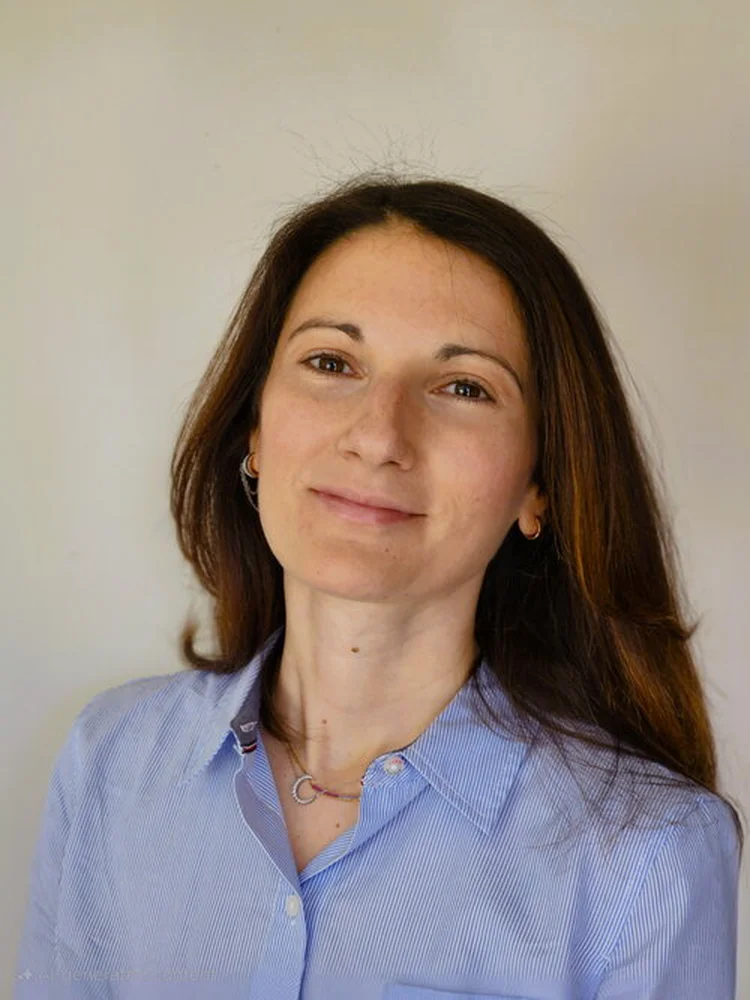
Ilaria Strocchia (Spanish and Portuguese) is a 2025–2026 HRI Graduate Student Fellow.
Her current research project, “Flowing Histories: Examining the Role of Water in Shaping Urban Spaces and Identities Across Cultures,” investigates how bodies of water—rivers, lakes, and the sea—have historically shaped urban places in Valencia, Mexico City, and Naples while simultaneously forging their stories.
Learn more about HRI’s Campus Fellowship Program, which supports a cohort of faculty and graduate students through a year of dedicated research and writing in a collaborative, interdisciplinary environment.
What is unique about your research on this topic?
My research explores the “hydro-social” transformation of urban spaces by comparing the hydraulic and literary imaginaries of Mexico City, Naples, and Valencia: three cities bound together by their shared Spanish imperial legacy. What distinguishes my approach is the application of hydro-critical frameworks to urban centers, treating each geography according to the specific dynamics of its distinct bodies of water: the lacustrine system of the Valley of Mexico, the coastal Mediterranean of Naples, the riverine environment of Valencia. I came to this comparative framework out of a conviction that water, its presence, its management, its erasure, is one of the most telling registers of how human power organizes space and life.
What drives your interest in this research?
My interest was initially sparked by growing up in Italy, a peninsula where water is not just a landscape but a fundamental part of daily life and a profound historical legacy shared with the Spanish world. This personal connection evolved into a fascination with the material resistance of water: how it seeps, floods, and dissolves the solid foundations of urban life. I remain driven by investigating how these dynamics of water management are reproduced across different geographies, generating environmental paradoxes. This is most evident in the case of Mexico City: the “water city” turned megacity, where the historical erasure of the lacustrine system directly informs contemporary social stratification and environmental crisis. My work remains vital to me because water, as an essential yet contested resource, continues to expose the hidden vulnerabilities existing within our modern cities.
How has the fellowship seminar shaped the way you’re approaching your research?
The “Story & Place” seminar challenged me to translate my findings into broader conversations. I have deeply appreciated this collaborative environment where ideas circulated generously, and where questioning and being questioned felt like a shared intellectual investment. Each participant’s disciplinary background opened a new angle of vision onto my project, bringing new dimensions to how I write, the sources I seek out, and how I position my theoretical frameworks and literary analysis. Getting to know everyone’s projects has also been genuinely inspiring: which reminds me of the remarkable breadth of the questions humanities can hold.
Editor's note: This story first appeared on the Humanities Research Institute website.