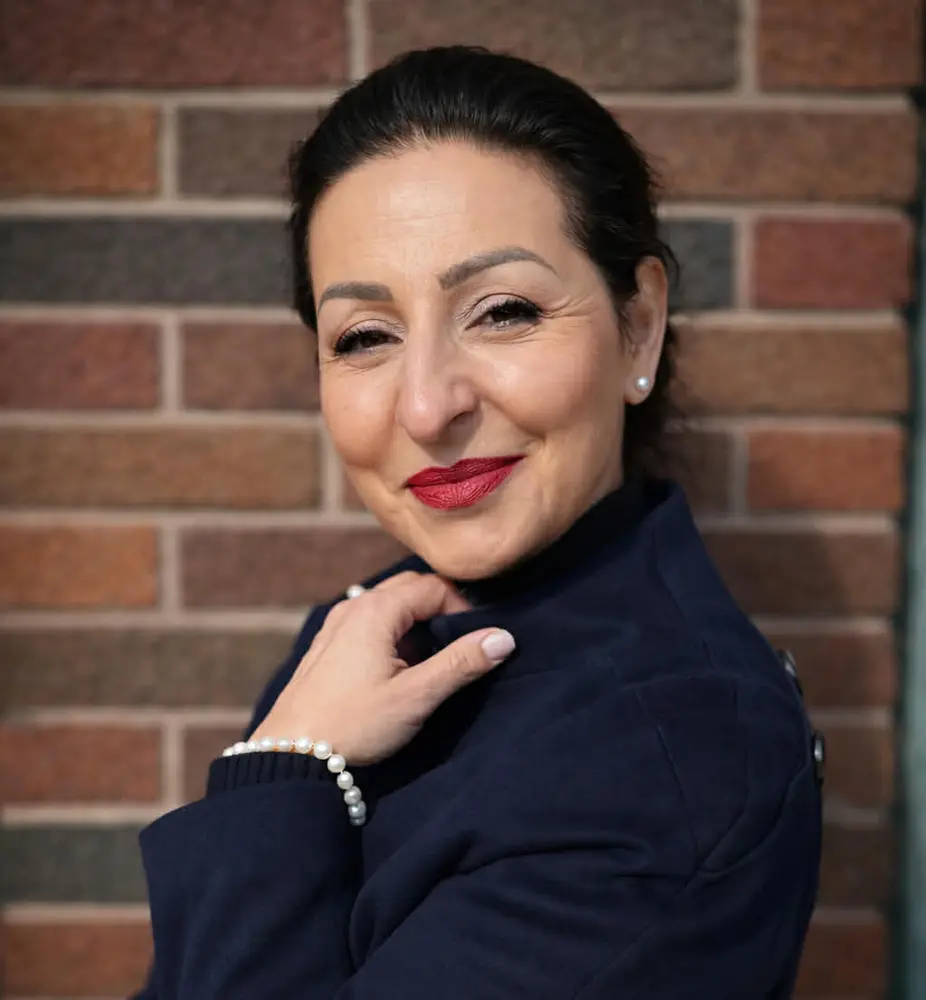
A new faculty member in the Department of Slavic Languages & Literatures is introducing a new generation of students to Bulgarian language, history, and culture.
Professor Iliyana Dimitrova is the nationally-selected vanguard of a new cultural exchange between Bulgaria and the United States. Following a rigorous selection process, Dimitrova is serving as the first instructor of the Bulgarian studies pilot program at the University of Illinois.
It’s the first Bulgarian language program in the U.S. in decades.
We recently spoke with Dimitrova about her new role.
Who are you, and what is your role at the university?
I am a senior lecturer and PhD in contemporary Bulgarian language at the University of Veliko Tarnovo “St. Cyril and St. Methodius” in Bulgaria. This fall, I joined the Department of Slavic Languages & Literatures at Illinois. Here, I teach Bulgarian language and culture, and I am truly excited to share my passion for Bulgarian with the Illinois community.
What inspired you to become a language teacher?
For me, it wasn’t really the idea of becoming a language teacher—it is the fascination with and love for Bulgarian that truly inspire me. I could probably teach other languages, but Bulgarian is the only one I can truly teach with my whole heart. As a student, I realized that language is much more than vocabulary and grammar. Behind it lies an entire universe of beliefs, values, emotions, and ways of thinking—the very mindset of a community. What continues to inspire me is discovering the deep connection between language and thought, and turning teaching into something more than just words and grammar. For me, teaching a second language is about opening a door to a new world—a new way of seeing and understanding the world around us. And that is what makes being a language teacher truly exhilarating.
Why should students study Bulgarian at Illinois?
Bulgarian is a unique language, as it is both a Slavic and a Balkan language. Lexically, it is close to other Slavic languages, but its grammar has been significantly influenced by neighboring Balkan languages such as Greek, Romanian, and Albanian. It is, in fact, the only Slavic language without case inflection and with a definite article—features that make it closer to English and, in many ways, more accessible to learners.
Why should students study Bulgarian at Illinois? Because Bulgarian is magnetic—the more you learn it, the more you want to speak it. And somewhere along the way, learning turns into discovery.
How do you hope to see this initiative develop?
I would like more people to know that Bulgarian is offered on campus. My greatest hope is that the Bulgarian language program will continue to grow, become firmly established, and find its lasting place within the academic life of the university—one that students can choose, benefit from, and be enriched by.
What's your favorite Bulgarian word or expression without a direct English translation?
My favorite word in Bulgarian is “благодаря” [blagodarya]. It does, in fact, have a direct English translation—it means “thank you,” but if we look more closely at the word, we discover a deeper meaning. The word is formed from “благо” [blago], which means something deeply good—kindness, well-being, even bliss—and the verb “даря” [darya], meaning “to give” or “to gift.”
So when someone says or does something kind for you, by saying
“благодаря”, you are not just expressing thanks—you are, in a way, “gifting” them something in return: kindness, goodwill, even a blessing.
And all of that lives in a single word: quiet, generous, and full of meaning.
Is there anything else you would like to add?
The program is continuing, and I would be delighted to welcome anyone who would like to join Bulgarian language classes next academic year or the year after.
In the meantime, I am excited to share that, as part of the Global Educators Program, I will be teaching Bulgarian at the 14th Annual “Taste of Language.” The event will take place in person on Tuesday, March 31, from 6 to 8 p.m. in the Literatures, Cultures & Linguistics Building (LCLB) Atrium and nearby first-floor classrooms. I will be offering several 15-minute mini language classes.
Come and have a little taste of Bulgarian—it’s going to be great fun!
To learn more about Bulgarian course offerings and events, visit the Department of Slavic Languages & Literatures website.