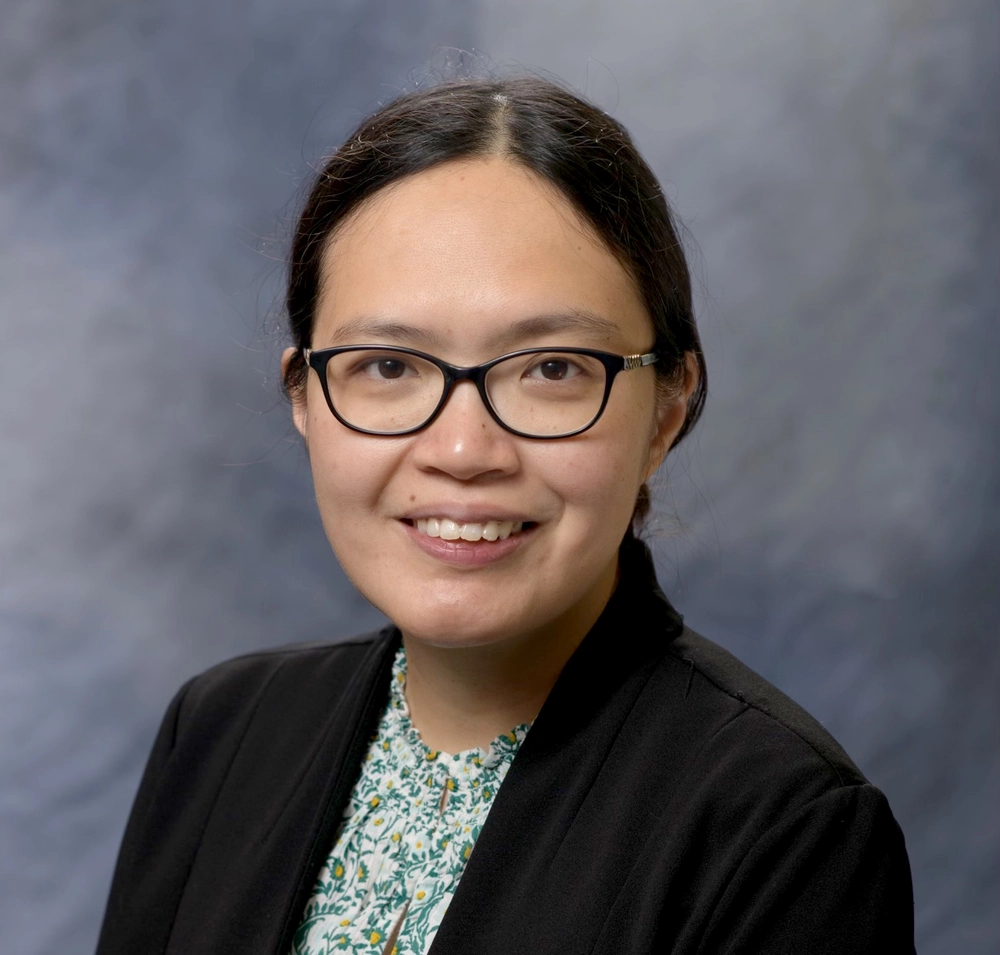
Anna Mendoza, a professor of linguistics, was recently featured by the Interdisciplinary Health Sciences Institute for her research focusing on teaching English to speakers of other languages (TESOL) and sociolinguistics. Mendoza's expertise draws on a range of practical and educational experiences to examine the strengths, processes and needs of language learners, particularly bi/multilingual learners, how to use students’ languages to teach a target language in different contexts.
The author of "Translanguaging and English as a Lingua Franca in the Plurilingual Classroom" (Multilingual Matters, 2023), Mendoza’s scholarship appears widely in top journals, and she serves on editorial boards for leading publications including TESOL Quarterly and Foreign Language Annals. She also has a well-established blog on bi/multilingualism in education that is read by people around the world.
At Illinois, she coordinates the MA TESOL practicum in partnership with the The Refugee Center and teaches courses in second language acquisition and qualitative research methods. Her current research focuses on Literacy Education and Second Language Learning for Adults (LESLLA).
To better understand the LESLLA needs within the practicum being delivered, Mendoza and The Refugee Center invited two community-academic scholars to contribute to a research study inspired by Bonny Norton’s work on immigrant women in Toronto and research on Identity Texts (Cummins & Early, 2022).
Together, they investigated how Afghan women from veteran families resettled in Urbana-Champaign use English in their daily lives outside the classroom. The project shed light on the potential opportunities and barriers that impact the women’s ability to speak, read, and write English. Learn more about the project.
Can you describe a goal you are currently pursuing?
Yes: improve methodological acumen! I’m currently writing a book chapter on methods for analyzing classroom discourse, teaching a 400-level course on qualitative research methodologies (Fall 2025), and co-editing a handbook on research methodologies for studying multilingualism in language education.
Obviously, as an Assistant Professor, I’m no methodological noob, but the more you learn the more you realize there is to learn! I am continually trying to improve my understanding of qualitative research methods in the field of applied linguistics: interviewing, ethnography, case studies, action research, discourse analysis of talk-in-interaction.
The race for funding, publications, and awards can compromise methodological training, and this can dull scientific endeavors, so I think it’s important for academic communities to retain and pass on the methodological knowledge needed to create empirically valid research; otherwise, what we produce will be discourse, not science. Society funds research, so it deserves research which (even if it’s slower to churn out) addresses real knowledge gaps and is applied to meet practical needs—not research that is conducted mainly for discursive purposes.
How has the focus of your research changed or evolved since you first started in the field?
My MA TESOL work involved a corpus of interviews with international university students about their experiences in Canada. My PhD work was about bi/multilingual students’ use of their languages and English as lingua franca in the ESL classroom, a year-long ethnography I conducted in two high school classrooms in Hawai’i.
Then, as an Assistant Professor in Hong Kong, I explored one of my PhD research questions (how languages people already know can help them learn a target language such as English) further by surveying and interviewing teachers in Hong Kong, Mainland China, Canada, and the U.S. for two years using an instrument I developed with my collaborators called the CACTI (Classroom Approaches to CLIL [Content Integrated Language Learning] and Translanguaging Inventory).
When I came to University of Illinois Urbana-Champaign and started teaching the MA TESOL practicum, I applied that same question, how to scaffold target language learning with people’s existing language knowledge, to adult beginner English language and literacy with people from Afghanistan, using teacher action research methodologies.
In other words, I’ve always studied TESOL and used qualitative methods but increasingly found myself 1) becoming interested in learners’ languages other than English, 2) studying learners/participants more removed from university settings, and 3) doing research that involved increasing levels of collaboration and community partnerships.
How is most of your research funded? Can you share how your approach to seeking funding is changing in the current funding climate?
I received generous start-up funding from the Department of Linguistics, which was topped off by a Lincoln Excellence for Assistant Professors (LEAP) award. It’s a tough situation, as I won a couple internal grants that I wanted to scale up for external grants… which no longer exist. I think the key to getting external funding is to network more and pursue interdisciplinary work, but the research interests have to be mutual and I’m still working to find suitable partners. I think involvement with IHSI might help in this regard.
What is something you want your colleagues to know about you or your research?
There are “non-hot” research topics that are timely and important – such as language and literacy education for emergent adult readers due to the unprecedented population displacement caused by today’s global crises – and deserve more people’s labor and attention. Qualitative research can yield transferable/generalizable findings beyond the context.
What would you like to know about other researchers?
I’d like to know how other researchers balance the competing interests of grant funders, academic gatekeepers, and the communities whose problems could be addressed through research. Specifically, how they can win the grants and publish the papers while still delivering adequate attention and concrete assistance to the needs of the communities.
Are there new research areas that you are interested in pursuing in the next 3 - 5 years?
Because of my current research agenda, I’d like to know more about how print literacy emerges and develops. There’s a lot of research on that already; it’s not new knowledge, but it’s something I need to know for teaching.
The research question I’m interested in has to do with how fast language and literacy learning can progress in adult English beginners, if they’re new to print literacy, and can only have a few hours of instruction a week with volunteer teachers. What is the most that can be achieved in those hours, and what are the most efficient forms of instruction?
So far, we’ve found that crosslinguistic pedagogy has certain benefits, as well as very systematic approaches to phonics instruction that involves breaking down words learners already know, working on decoding automaticity, and getting a critical mass of vocabulary.
There’s been seminal work in the Netherlands which found that government-funded intensive classes are necessary to see substantial progress (e.g. full-time for a year), but where, especially in the current political climate, is there government funding for that?
I’ve also read case studies of previously illiterate immigrant women in Utah that show private tutoring over a few years can help someone pass the U.S. citizenship exam – and that’s what we need to find out, how we can get there with the limited resources we have. The pursuit of such a research question highlights my hope that it can be done.
Visit Professor Mendoza's website to learn more about her work or reach out to her via email (annamend@illinois.edu).
Editor's note: This story first appeared on the Interdisciplinary Health Sciences Institute website.