LING 250
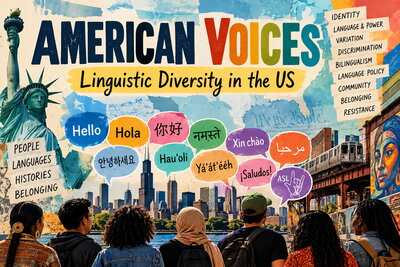
This course explores the rich linguistic diversity of the United States, examining how language use reflects and shapes social identities, cultural histories, power relations, and inequalities. Drawing on sociolinguistic scholarship, the course challenges popular misconceptions about language, particularly the myth of Standard English as an inherently superior variety, and investigates how language ideologies contribute to linguistic prejudice and discrimination. We focus on the relationship between language, ethnicity, race, identity, and power, including the social consequences of linguistic stereotyping and profiling. We examine regional and social varieties of American English alongside Indigenous languages, American Sign Language, Hawai‘ian Creole, and heritage languages spoken by Spanish-speaking, East Asian, African, South Asian, and Middle Eastern communities.
The course also addresses language maintenance, language endangerment, bilingualism, and language policy, critically evaluating the English-only movement and debates surrounding immigration and linguistic rights. Particular attention is given to the representation of linguistic diversity in social media, including racialized language practices and digital identity construction.
Through readings, films, discussions, and independent research, students develop the analytical skills necessary to understand linguistic variation and critically evaluate how language differences become implicated in social exclusion, cultural belonging, and structural inequality.
Term: Spring 2027
Instructor: Rakesh Bhatt
Credit: 3 hours
This course satisfies the General Education Criteria in Spring 2027 for:
- Social & Beh Sci - Soc Sci
- Cultural Studies - US Minority